Lower School: Pre-K through 4th Grade
At St. Paul’s Episcopal School, our Lower School program provides students with a strong academic foundation while nurturing curiosity, creativity, confidence, and a love of learning. Guided by E.D. Hirsch’s Core Knowledge Sequence, our curriculum follows established guidelines that support the cognitive, social, emotional, and physical development of young learners. Through engaging lessons, hands-on experiences, and meaningful relationships with teachers and classmates, students develop the skills and character needed for future success.
Pre-K & Kindergarten
In Pre-K and Kindergarten, learning is active, joyful, and purposeful. Children are encouraged to explore the world around them through hands-on activities, learning centers, creative play, and sensory experiences that inspire curiosity and discovery. Our classrooms are designed to provide opportunities for whole-group instruction, small-group collaboration, individual exploration, and outdoor learning.
Language arts and mathematics are introduced through engaging, developmentally appropriate activities that build foundational skills while fostering confidence and independence. Students are immersed in rich literature, storytelling, early writing experiences, and problem-solving opportunities that encourage critical thinking and creativity. Handwriting readiness is taught through the Handwriting Without Tears program, helping students develop the fine motor skills needed for future success.
In addition to their core academic subjects, students participate in Spanish, technology, music, art, physical education, and religious studies. Music and art are woven into the fabric of daily classroom life, providing opportunities for self-expression, creativity, and exploration.
Grades 1–4
The primary focus of Grades 1–4 is building a strong academic foundation while helping students become confident, independent learners. Through the use of Responsive Classroom practices, hands-on learning experiences, and real-world applications, students develop strong academic skills alongside important social and emotional competencies.
Teachers recognize that every child learns differently and thoughtfully design lessons that accommodate a variety of learning styles and abilities. Subjects are integrated whenever possible, allowing students to make meaningful connections across disciplines and deepen their understanding of concepts. Technology is incorporated throughout the curriculum as students learn keyboarding, word processing, research skills, and the responsible use of digital tools to enhance learning.
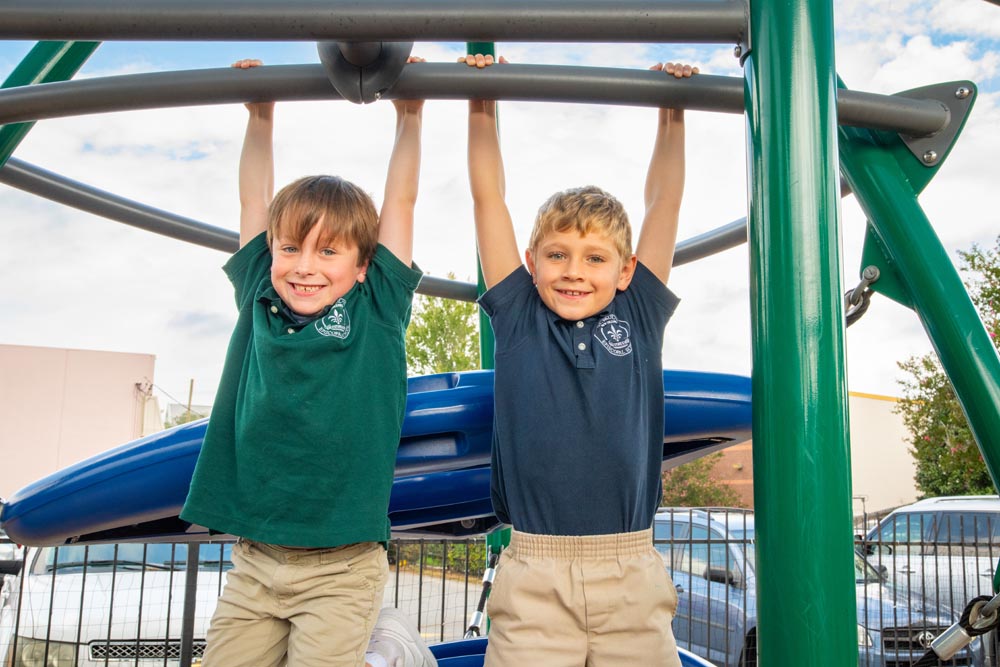
Learning extends beyond the classroom through integrated projects, grade-level traditions, field trips, service opportunities, and special events that bring lessons to life. Students also participate in Spanish, art, music, technology, religious studies, and physical education each week, creating a well-rounded educational experience that nurtures the whole child.
At St. Paul’s, students are encouraged to think critically, communicate effectively, collaborate with others, and develop the confidence to take on new challenges. Whether working independently or as part of a team, they learn the value of perseverance, creativity, and responsibility.
Learning Comes to Life
Some of our most memorable learning experiences happen when students have the opportunity to immerse themselves in their studies.
First Grade Authors
First-graders become published authors by writing and illustrating their own books throughout the year. Their Fifth Grade Panther Pals visit weekly to help edit and publish their work. At the annual First Grade Book-In, students proudly share their creations with family members, celebrating their growth as writers while strengthening skills in spelling, sentence structure, and creative expression.
Second Grade Hoedown
As part of their study of Westward Expansion, second-graders celebrate with a traditional hoedown. Students learn square dances and pioneer songs, create model sod houses, and experience aspects of frontier life by making cornbread and butter. Families join the fun as students bring history to life through music, food, and hands-on learning.
Third Grade Science Exploration
One of the highlights of third grade is the fetal pig dissection, which provides students with an unforgettable opportunity to connect classroom learning to real-world science. As they identify organs and body systems, students gain a deeper understanding of anatomy and are often amazed by how much they already know from their human body studies.
Fourth Grade Adventures
Fourth grade is a year of growth, leadership, and increased independence. Students bring their reading of Treasure Island to life through an overnight camping trip and treasure hunt, transforming literature into an unforgettable experience. It is also the first year students receive traditional grades and lead their own parent-teacher conferences, helping them develop responsibility, self-reflection, and ownership of their learning journey.